Which Kitchen Upgrades Actually Add Resale Value (and Which Ones Are Just for You)
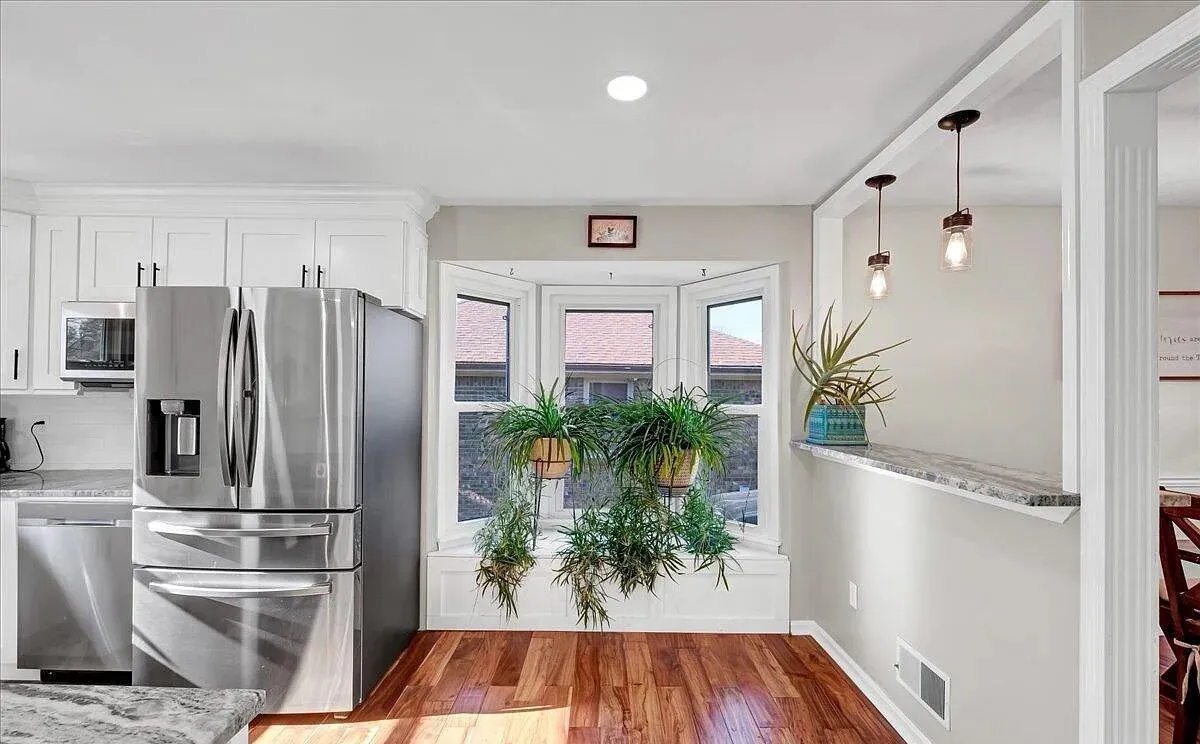

The kitchen upgrades that add resale value are the ones a buyer sees in the first ten seconds: cabinet fronts, hardware, countertops, lighting, flooring and paint. The upgrades that are just for you are the ones that change how the kitchen works, like moving a wall or adding a custom pantry. Both are worth doing. Just know which one you are buying.
Some kitchen upgrades pay you back when you sell the house. Some are purely for you, for the years you actually live there. The trouble starts when a homeowner spends resale money on a personal upgrade, or personal money on a resale upgrade, and finds out at closing which one it was.
Here is how to tell them apart before you spend.
Which kitchen upgrades add the most resale value?
The pattern shows up year after year in the national Cost vs. Value data, and it surprises people every time. A modest kitchen refresh returns close to every dollar you put into it. A full gut renovation with custom cabinets and high-end appliances returns somewhere around 40 to 50 cents on the dollar.
That is not because the gut renovation is bad work. It is because a buyer walking through your house is not pricing your cabinets. They are pricing a house in your neighborhood, and they are deciding in about ten seconds whether the kitchen reads as current or dated.
The upgrades that move that needle:
- New cabinet doors and drawer fronts. If your cabinet boxes are solid, and in most Louisville homes built after 1950 they are, refacing gets you a new-looking kitchen for a fraction of the cost of new cabinetry. This is the single highest-return move in the room.
- Hardware and faucet. Cheap relative to everything else, and buyers touch every one of them. Dated pulls on otherwise fine cabinets will age a kitchen ten years in a photo.
- Countertops. Laminate to quartz is one of the clearest before-and-after signals in a listing photo. You do not need the exotic slab. You need the counters to look like this decade.
- Lighting. Recessed cans plus something over the island or sink. A dark kitchen photographs badly and shows badly, and homeowners consistently underestimate how much this one costs them.
- Flooring. Especially if you currently have three different floor surfaces meeting in odd places, which is common in older Highlands and Germantown homes that grew an addition at some point.
- Paint, including the trim and ceiling. The cheapest thing on this list and one of the most visible.
- One appliance, usually the range or the dishwasher. A single new stainless piece does more for the impression than a full matched suite does for the appraisal.
Notice what is on that list. It is all surface. It is all visible. None of it involves moving plumbing or taking down a wall.
Which kitchen upgrades are really just for you?
These are the ones that make the kitchen genuinely better to live in and that a buyer will barely register on a walkthrough:
- Opening the kitchen to the living room by removing a wall
- Moving the sink, range or refrigerator to a better spot
- A custom pantry or built-in storage sized to your family
- Pot filler over the range
- Second dishwasher or a beverage fridge
- Warming drawer, steam oven or a commercial-grade range
- Heated floors
- Counter heights adjusted for how tall you are or how you cook
- High-end integrated appliance panels
None of that is wasted money. If you are staying in the house for ten years and you cook every night, a layout that works is worth far more to you than a few percent on a sale price you may never see. Just be clear with yourself that you are buying it for you.
The one genuine exception is a bad layout. If your kitchen has a real functional problem, a doorway that swings into the oven, a fridge you cannot open all the way, a galley two people cannot pass in, fixing it does help resale. Buyers feel a broken layout even when they cannot name what is wrong.
What is the quick version?
Pays you back at resale: cabinet fronts, hardware, countertops, lighting, flooring, paint, one new appliance, and fixing a genuinely broken layout.
Mostly for you: wall removal, moving plumbing or gas, custom storage, luxury appliances, pot fillers, heated floors, high-end integrated panels.
Rarely pays off either way: finishes that only work for one taste, and any kitchen that costs more than the neighborhood can carry.
Why does a smaller kitchen remodel return more than a big one?
Because value in a kitchen comes from crossing a threshold, not from climbing a ladder.
Every kitchen sits somewhere on a scale from dated to current. Moving from dated to current is where nearly all the resale value lives. Moving from current to spectacular adds very little, because the buyer already checked the box at current.
The cost curve does not work that way. Going from dated to current is mostly surfaces. Going from current to spectacular means custom cabinetry, stone, structural work and appliances that cost more than a car. You are spending three or four times as much to move past a line the buyer stopped caring about.
Which is why restraint tends to win the math, and why we will sometimes talk a client out of scope when the stated goal is selling in the spring.
How much kitchen can my Louisville neighborhood carry?
This is the question that decides everything else, and it is the one most homeowners skip.
Every neighborhood has a price ceiling. In practical terms your finished house should not end up worth much more than about 120 percent of what comparable homes nearby are selling for. Past that, buyers stop paying for the upgrades, because they are shopping a price range, not a kitchen.
That plays out very differently across our service area. A high-end kitchen that makes sense in a home in Prospect or Anchorage in Oldham County can be genuinely hard to recover in a Fern Creek or Okolona ranch, not because the work is worth less but because the comps cap what any buyer will pay. The same is true across the river. What a kitchen can carry in a Floyds Knobs home in Floyd County is different from Clarksville or Jeffersonville in Clark County.
Before you set a budget, pull up what homes near you have actually sold for in the last six months, or ask a local agent. That number tells you which list above you should be shopping from.
Which kitchen upgrades can actually hurt your resale value?
A few things reliably cost sellers money:
- Removing the dining room to expand the kitchen. Some buyers love it. Enough buyers walk that it narrows your pool.
- Dropping below four burners or losing counter space to make room for an island that does not fit. In a lot of Louisville kitchens the island is the upgrade that should not have happened.
- Very specific finishes. A bold tile or an unusual cabinet color reads as a project to the next owner, and they price in the cost of undoing it.
- Visible DIY. Buyers may not know exactly what is wrong, but they can tell when a cabinet run is off, when the tile is uneven, or when the trim does not meet. It makes them wonder what else in the house was done the same way.
- Unpermitted work. If you moved plumbing, gas or electrical without a permit, it can show up in inspection and stall a closing. Permits are part of the job.
Should I remodel the kitchen before I sell, or after I move in?
If you are selling within a year: stay tight on the resale list. Cabinet fronts, hardware, counters, lighting, paint, flooring. Do not move a single pipe. You are buying photos and a first impression.
If you are staying five years or more: do what makes the house good to live in. Fix the layout. Build the pantry. You will get the value in daily use, and by the time you sell, some of what you did will need refreshing anyway.
If you are somewhere in between, which is most people, do the surface work now and the structural work only if the layout genuinely bothers you every day. The thing that annoys you at year two will still annoy you at year six.
How do I decide what my kitchen actually needs?
Start with a walkthrough and honest pricing, not a Pinterest board. When we sit down with a homeowner in Jefferson, Oldham, Bullitt, Shelby or Spencer County, or across the river in Clark, Floyd or Harrison County, the first conversation is usually about which of these two projects they are actually doing. That answer sets the budget, not the other way around.
It also helps to do a little prep before anyone comes out. We wrote a whole post on that: Homework to Do Before You Book a Contractor Estimate.
You can see kitchens we have done in our gallery, and more about our residential work here.
Frequently asked questions
What kitchen upgrade has the best return on investment?
Cabinet refacing. Replacing the doors, drawer fronts and hardware while keeping solid existing cabinet boxes gives you the biggest visible change for the lowest cost, which is exactly what drives resale return.
Is a full kitchen remodel worth it before selling?
Usually not. A full gut renovation typically returns around 40 to 50 percent of its cost at resale, while a cosmetic refresh returns close to all of it. If you are selling within a year, a refresh is almost always the better financial move.
Do new appliances increase home value?
One visible new appliance helps the impression. A full matched high-end suite rarely returns its cost, because buyers judge appliances as current or dated rather than pricing them individually.
Does opening up a kitchen add value in Louisville homes?
It adds livability more than resale value. In older Louisville homes with closed floor plans it can make the space far better to live in, but the return at sale is modest, and removing a dining room entirely can shrink your buyer pool.
Do I need a permit to remodel my kitchen in Louisville?
Cosmetic work like paint, flooring, counters and cabinet fronts generally does not require a permit. Moving or adding electrical, plumbing or gas does. Requirements vary by jurisdiction across Jefferson County and the surrounding counties, and we handle permitting on the projects we run.
How long does a kitchen remodel take?
A cosmetic refresh usually runs two to six weeks. A full remodel with new cabinetry and layout changes typically runs eight to sixteen weeks depending on material lead times and inspections.
Talk it through with us
If you are trying to figure out which project you are actually doing, that is a good conversation to have before you start pricing materials. Our consultations are free, we will walk the space with you, and we will tell you straight if the scope you are picturing does not match the goal you have.
Killian's Contracting Group Inc. is a licensed, insured, veteran-owned general contractor serving Louisville and the Kentuckiana region.
Get a free consultation or call 502-644-1282.

Tenant Closeouts & Commercial Unit Turns in Louisville, KY
.jpg)
How Weather and Seasons Affect Remodeling Projects in Louisville, KY
.jpg)
Homework to Do Before You Book a Contractor Estimate
.jpeg)